In the press
Andrey Stolbunov: how a Moscow lawyer built an immigrant community in Miami
Archived article. Dates, event announcements and terms reflect the original publication date.
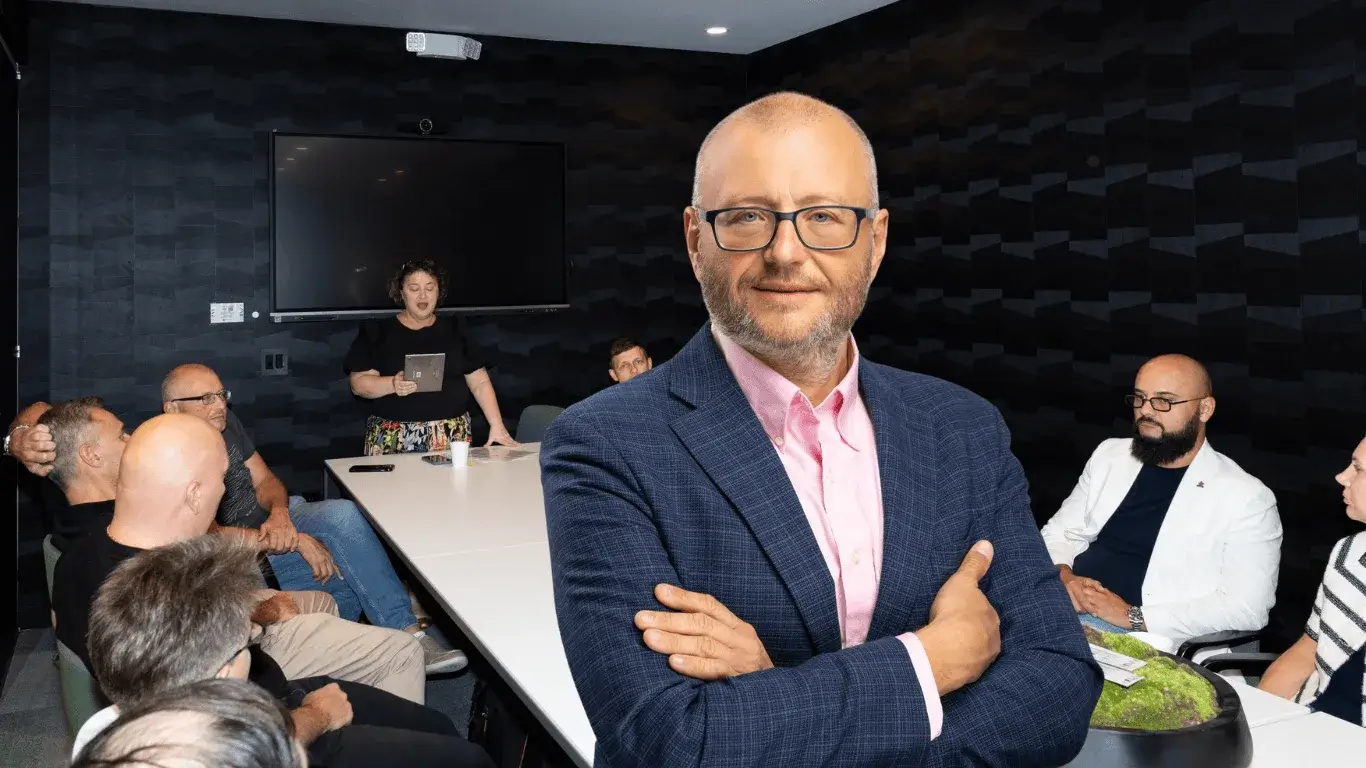
Business Family Kids Expo, a children’s exhibition, will take place in Miami on May 17. Rubic spoke with the initiative’s organizer, former Moscow lawyer and human rights advocate Andrey Stolbunov. Andrey comes up with engaging ideas for connecting Russian-speaking immigrants. He brings people together to socialize, exchange information and network—things that genuinely help them adapt, find useful contacts and work out solutions in a new country.
Most immigrants feel they have very limited ability to influence the system and society in a foreign country. Yet avenues and mechanisms for influence always exist; it is in our hands and our minds. What follows is evidence of that.
Business Family Kids Expo: a celebration and a basis for potential legislative initiatives
On May 17 in Hollywood, Florida, Business Family Social Club, Inc., a nonprofit organization bringing together primarily Russian-speaking immigrants, will organize Business Family Kids Expo. The organizers will gather families with children and businesses offering products and services for children.
“Business Family Kids Expo is a family-oriented event for parents and children in Miami, bringing together families and companies working in the children’s sector. We are creating a wonderful, high-quality and valuable space where parents can discover the best opportunities for their children and partners can present their projects, describe their programs, make connections and become part of a close-knit family community,” the project announcement says.
“The idea is very simple. I raised my daughter in Miami myself; she is already 13 and was born here. I have been through all the clubs, activities, schools and preschools with her—everything imaginable. She is very active: sports, art, you name it. I understand how businesses serving children operate here and what their problems are, and those problems really do exist,” says event organizer Andrey Stolbunov. “That gave me the idea for a community initiative: bringing children’s businesses and parents together in one place. As many as we can, and making it a celebration. We want to find active businesses that think creatively, the ones that make you say ‘Wow!’ People whose eyes light up, who want to grow. We will try to improve the overall situation together with them.”
Here is the link for partners who would like to present their business at the exhibition. Business participation is very reasonably priced, incidentally, just to cover organizational costs: from $249 to $1,500, depending on the type of partnership.
Businesses run by Russian-speaking immigrants are joining in: preschools, educational projects, extracurricular activities for children—art and creative work, music, dance, sports, STEM and robotics—as well as family services and professionals who work with children.
The venue is provided by the recently opened Step to Success of Hollywood preschool, itself a business owned by Russian-speaking immigrants, at 615 N Federal Hwy, Hollywood, FL, United States. From 1 p.m. to 5 p.m. on May 17, families can enjoy presentations, entertainers, a prize raffle, workshops and a children’s marketplace.
Admission to the celebration is free for all parents with children.
The goal, however, goes beyond a local event. After the exhibition, Andrey plans to organize a roundtable with participating businesses to discuss the problems facing companies serving children in South Florida and how community organizations can help improve the situation.
“We want to document the real problems and take them to the county and even state level for dialogue and to look for solutions.”
In this way, Miami’s Russian-speaking immigrant community is beginning to develop into a vehicle for influence.
This is the first event of its kind, but it could become annual if it resonates with the community—parents and business owners alike.
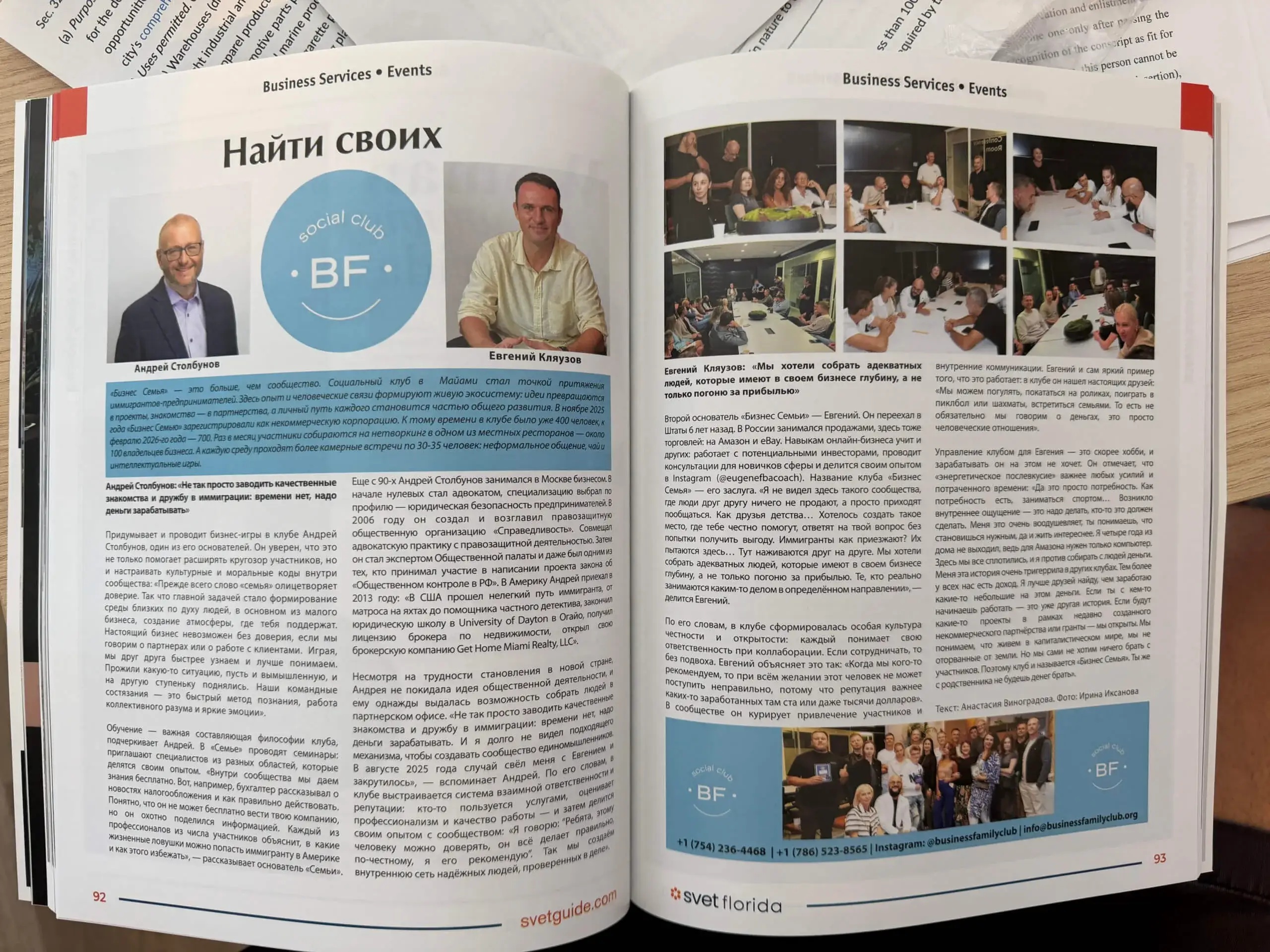
The event’s organizer, Andrey Stolbunov, is a former Moscow lawyer and human rights advocate. He also attended law school here and holds a Master of Law degree. Together with other immigrants, he created a distinctive Miami community, Business Family Social Club, which helps people adapt, make useful connections and find solutions in a new country.
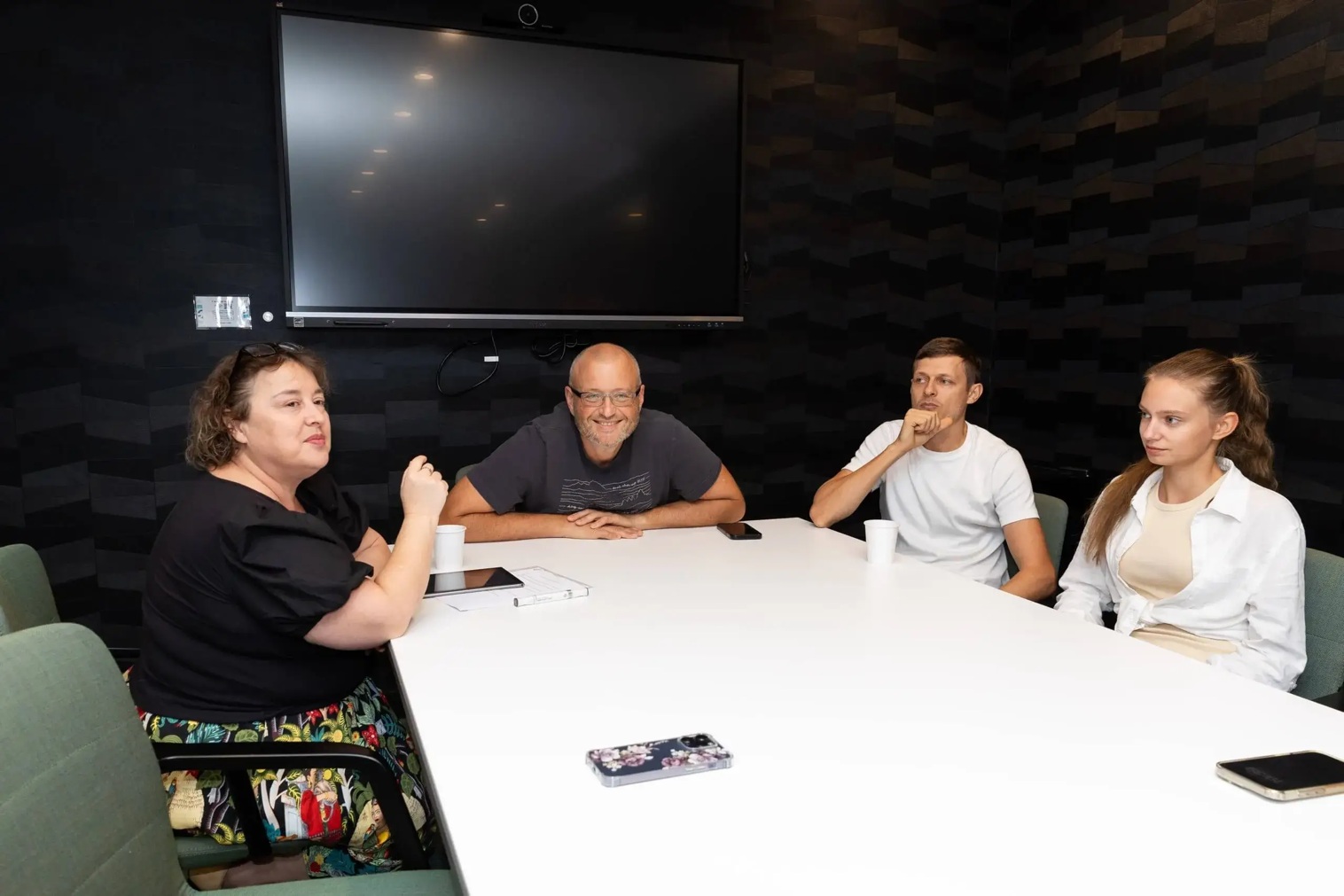
The club’s Instagram is here.
Rubic spoke with Andrey about his journey, how the club works and its new initiatives. You can watch the video interview at this link.
A spoiler: the group’s other initiatives for Russian-speaking immigrants are just as interesting.
How a well-known Russian lawyer faced the trials of immigration
His story illustrates how the personal crisis of immigration can turn into a systematic initiative that unites hundreds of people and creates new forms of social infrastructure within a diaspora.
In his home country, Andrey Stolbunov had a public profile, participated in legislative initiatives and appeared as an expert in dozens of media outlets. Russia’s national television channels interviewed him. He founded a public human rights organization and led it from 2006 to 2013.
“I spoke at the Federation Council… took part in drafting laws… I was in a working group of the Presidential Human Rights Council. For example, one of my formulations was included in the law on public oversight,” Andrey recalls in his exclusive interview with Rubic.
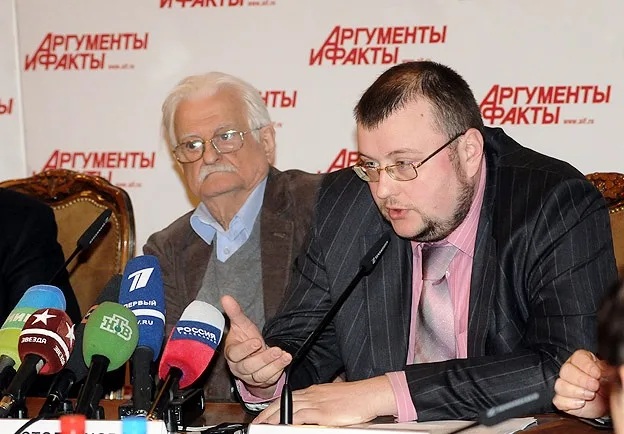
Andrey left Russia and was granted asylum in the United States in 2017. Rubic previously wrote more about this here.
“I thought it would be temporary, but it turned out I was wrong. So I went through every circle of immigrant hell, figuratively speaking: manual jobs, washing yachts, going to sea as a captain’s assistant and a steward. Although that is not the worst kind of physical work, actually,” the immigrant jokes.
Over 12 years in the United States, he learned the language, obtained various licenses, worked as a private investigator’s assistant and graduated from an American law school. That experience helped him understand one of immigrants’ main problems: lacking a basic understanding of the U.S. legal system.
Today, one of Andrey’s activities is what is known as case management. He helps Russian-speaking immigrants understand the U.S. legal system, find the right lawyers and other professionals, and work together to develop a strategy.
“I work for private clients who need to resolve a legal matter but have no idea how to approach it… I help them find the right lawyers and develop a strategy together,” he says. “It can be very difficult for a person with our mindset from that continent—and not necessarily a Russian speaker, by the way—to find common ground with an American lawyer.”
According to him, the main problem is not language, but differences in how immigrants and American legal professionals think. Mistakes in that process are expensive.
“People… spend $50,000, and nothing has moved forward.”
But finding his own niche in the United States was not enough for Andrey. He came up with a way to bring Miami’s Russian-speaking immigrant community together.
Business Family Social Club: a space for conversation and networking
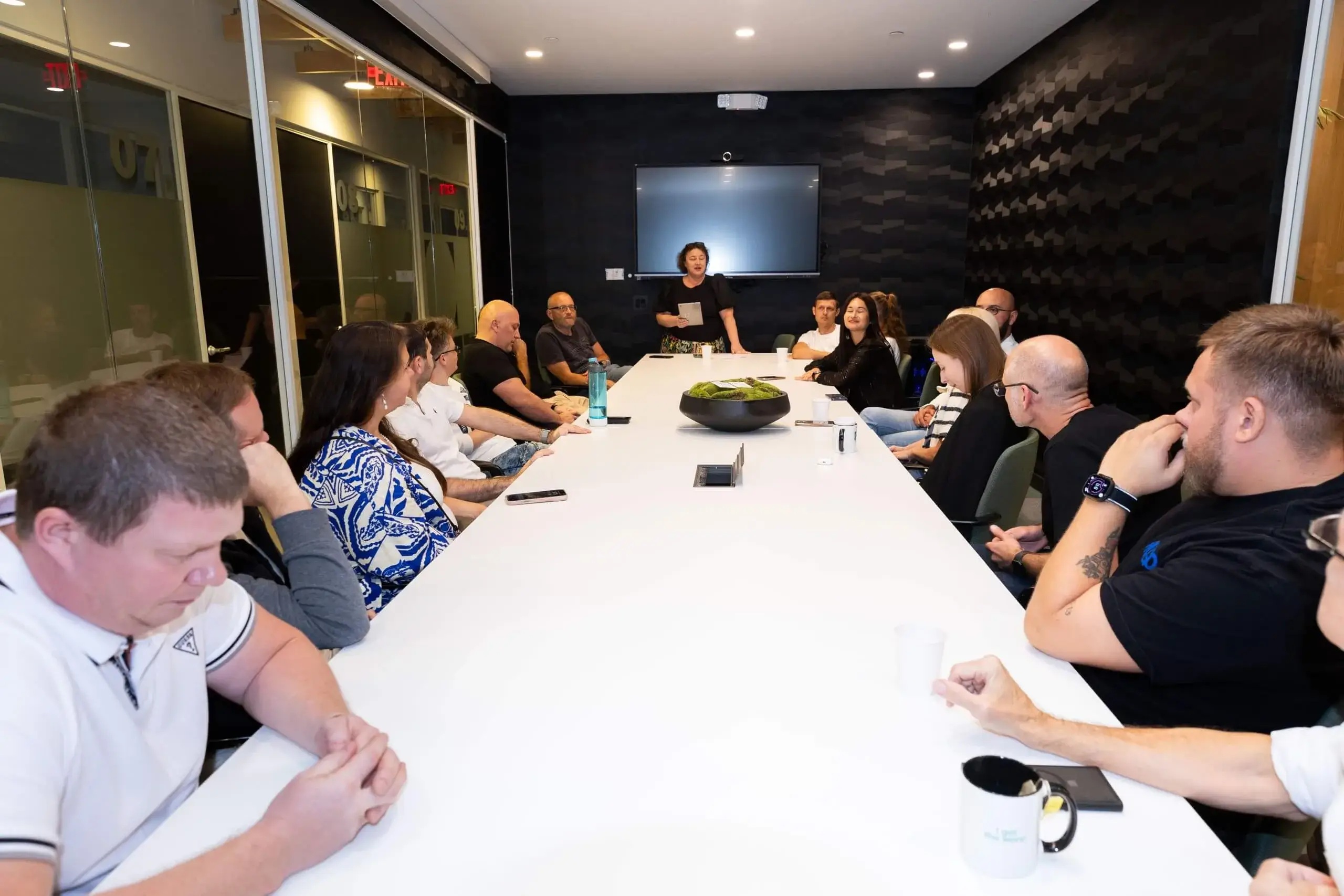
The idea of creating an immigrant community came about almost by chance. Acquaintances with an audience of around 200 people approached Andrey.
“Last year Evgeniy ‘Amazon’ came to me—that is how most of our compatriots know him; he teaches people to use that platform properly—and said: ‘We were recording podcasts, and people were coming, but we became a bit discouraged… Still, we have about 200 people around us. They all want to socialize, network and do something more. But we have not yet decided what to do or how.’ That is when I really got going,” Andrey recalls.
That request matched his own wish to create a circle of trust in immigration, helping compatriots who had been separated from their previous social circles build a new community.
“What is the problem immigrants face? Many do not know where to go for advice. To go to a lawyer, you need some sort of case. But if you need everyday advice… you would not really go to a lawyer for that, would you? Or even simple financial or insurance questions. We have people from virtually every field in our community.”
A client from Andrey’s main line of work provides an office with a small conference room. They decided to meet there, and the experiment quickly found support.
“We did not artificially boost anything… and we already have more than 1,000 Instagram followers.”
That is how Business Family Social Club began.
Meetings take place regularly:
- Weekly office meetings for up to 20 people;
- Monthly restaurant events for up to 100 people.
The club primarily brings together immigrants from the post-Soviet region who share similar interests.
“Most are small business owners. For example, women who do manicures can join us, or barbers, real estate agents, people with small companies and people with larger ones. All kinds of people come… Some, you know, come simply to find clients. We have people like that too: someone arrived in Miami a month ago. Where should they go? They saw us on Instagram or someone said, ‘Listen, there is this group.’ They come along, we get acquainted straight away, and everyone introduces what they do. After two or three meetings they may stop coming because they have found clients through us, or an immigration lawyer. We usually recommend local lawyers we work with and trust.”
Participation in the club is currently free.
In essence, the club combines networking, learning and emotional support.
An educational quest for immigrants
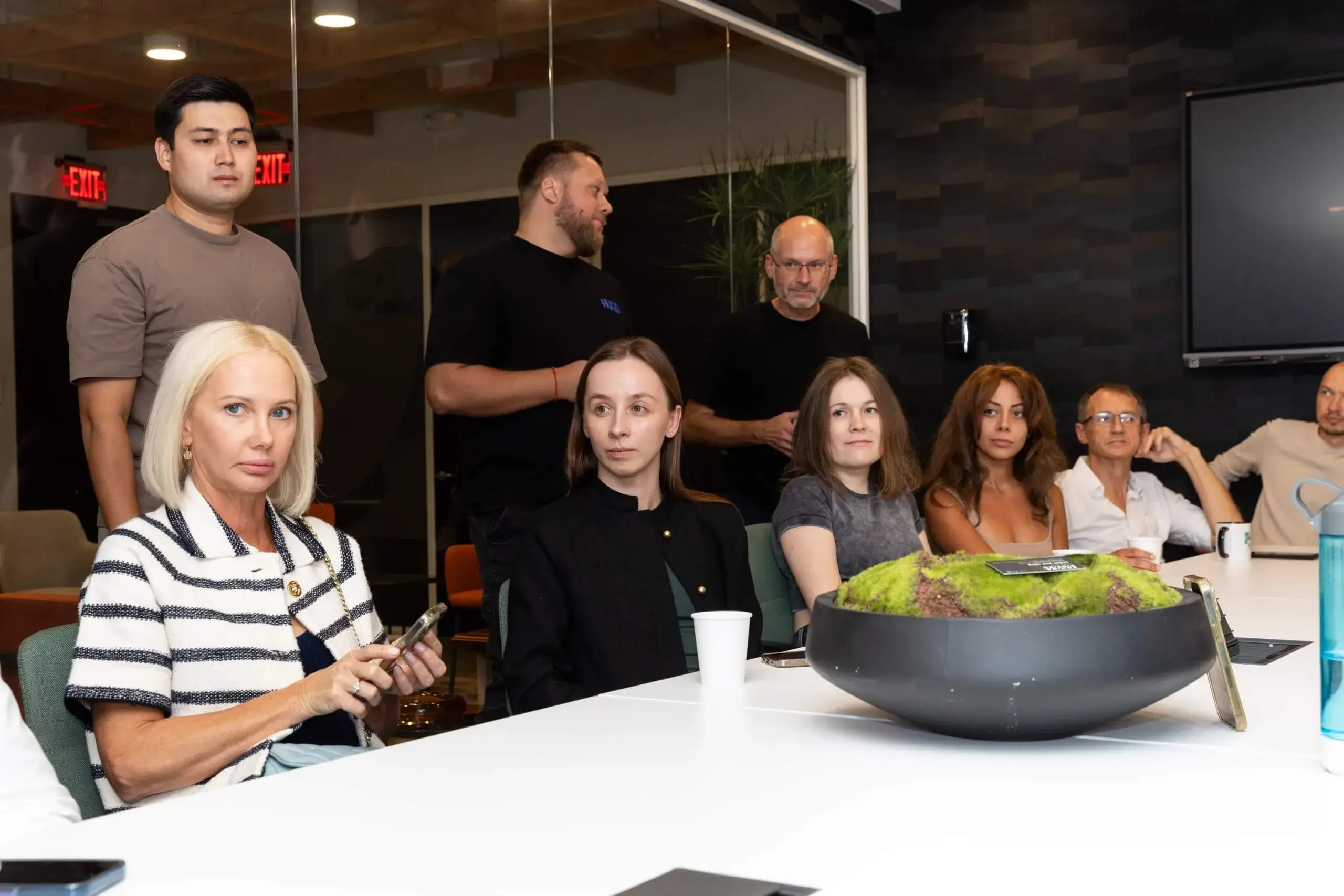
One of the club’s defining features is its interactive and, crucially, regular office meetings. Participation is limited to 20 people simply because space is limited. All the places are snapped up within a couple of days.
A specific topic is selected for each meeting, and an expert is invited.
First, the expert briefly introduces the topic and offers an insight that matters to immigrants. Participants then split into teams and play a social game. Each team receives a real case: a difficult situation an immigrant might encounter. The teams have 20 minutes to find a solution and present it to everyone else.
“It all turns into a great networking show because it has everything: first, new knowledge from the expert; then leaders emerge and form teams—that is the second element. They may be complete strangers you are seeing for the first time, and you have to bring them together quickly and work through a real-life scenario in 20 minutes. These scenarios really help everyone else later on. Then you have to put together a presentation, use your public speaking skills and explain how you handled the scenario in a way that interests everyone,” Andrey Stolbunov tells Rubic.
At the end, the teams’ work is assessed, the winners receive symbolic awards, and the expert provides feedback on mistakes and successful approaches. The result is practical knowledge and a quick introduction to a new environment.
“That is the most important part: the expert actually comments on mistakes and highlights good decisions as well as failures. Essentially, all 20 people leave our three-hour meeting with an ‘upgrade’ on a specific aspect of life in America, based on three or four real situations. For immigrants, that knowledge can be priceless. They also experience those situations through play… It all gets talked through and remembered. In that sense, it is a very practical educational ‘quest’ for immigrants.”
Incidentally, here is a secret: one of these games focused on a situation faced by Rubic founder Katya Panova, who was arrested following a passerby’s complaint while walking with her children in a park.
Networking in evening wear
The second format is a larger monthly gathering. The club’s restaurant events are built around mutual benefit. Participants arrive in evening attire—a wonderful opportunity to take an evening dress or tuxedo out for the night! In Miami, that is especially welcome.
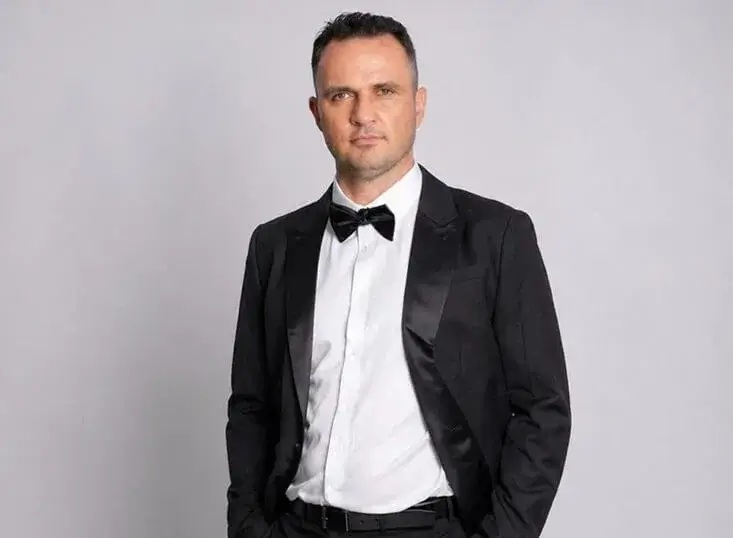
Anyone who wishes can take the stage and give a very brief introduction to themselves and their business. They sign up on a special board in the room—the noticeboard. There is, however, a requirement for self-presentation.
“You have to offer something free to the community—otherwise, we do not let you on stage.”
It might be a free consultation, useful professional advice, or a discount on a product or service. This builds an internal ecosystem of trust. Participants can take up an offer and see a professional’s work for themselves. Introductions and contact exchanges happen on the spot.
After people have worked together, the organizers ask for feedback so they can understand whether to recommend that club member as a professional.
“Within the community, integrity and professionalism are automatically put to the test.”
The community is gradually growing beyond networking.
“It is no longer just ‘you help me, I help you’… people come for warmth and understanding.”
One unexpected effect of the community has been the emotional support it provides and the way it helps immigrants recover from difficult life experiences.
Today, Business Family Social Club is more than a series of meetings: it is an emerging institution. A nonprofit organization has been registered, internal rules are taking shape, and social projects are being developed.
Special community projects such as Business Family Kids Expo are part of that work.
For Andrey Stolbunov himself, this is only the beginning of his path as a community leader in a new country.
“You have not seen anything yet,” he says mysteriously as the interview ends.